Grocery Shopping for Non-GMO Foods & Beverages
Updated: 5 hours ago
Non-GMO foods can be tricky to spot. Here is a simple guide to the crops and ingredients that commonly contain GMOs, and how to shop with confidence.

So you have decided you want to avoid GMOs in your diet and in what you serve your family. But as you know, product labels can be confusing! If you want help navigating the meat label, read understanding the meat label or watch our Quality Manager, Julie Divis, break it down below.
Let's go shopping for non-GMO foods
Shopping for non-GMO foods in the United States takes some detective work. Rules for disclosing bioengineered ingredients are narrower than many shoppers expect, and a product without a non-GMO label may or may not contain GMOs. You cannot tell just by looking at the front of the package.
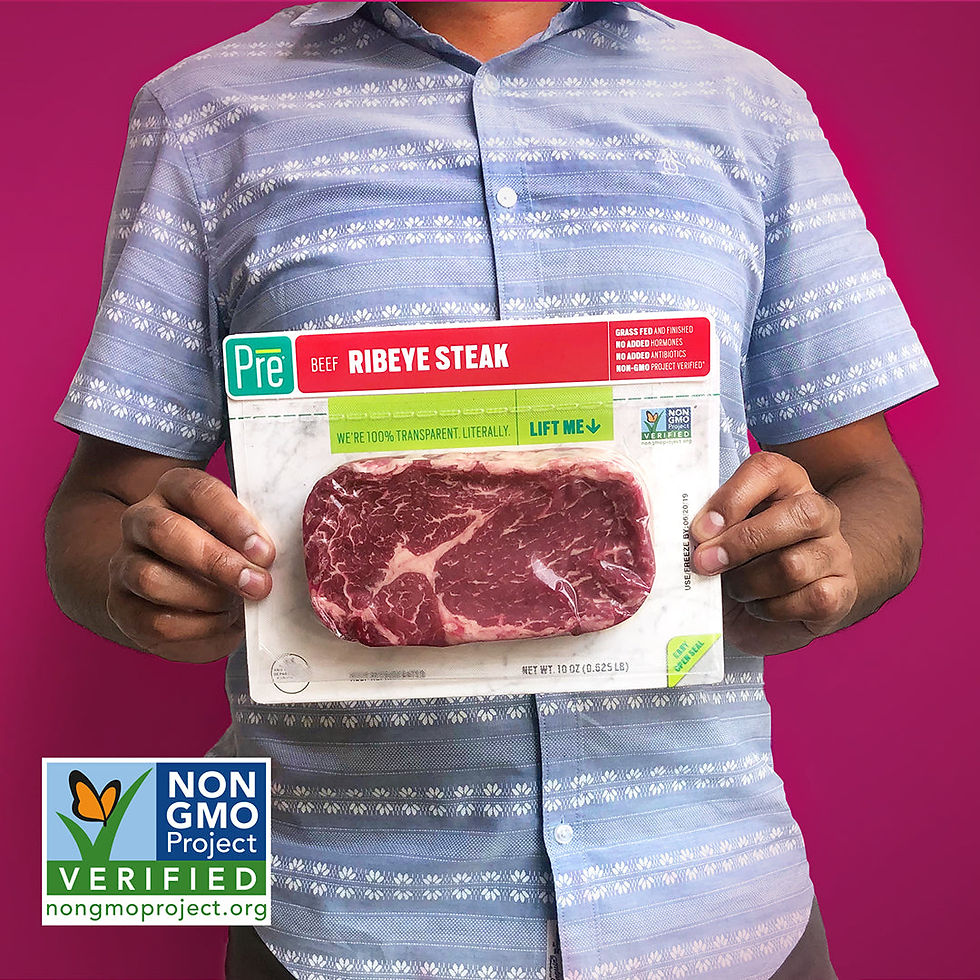
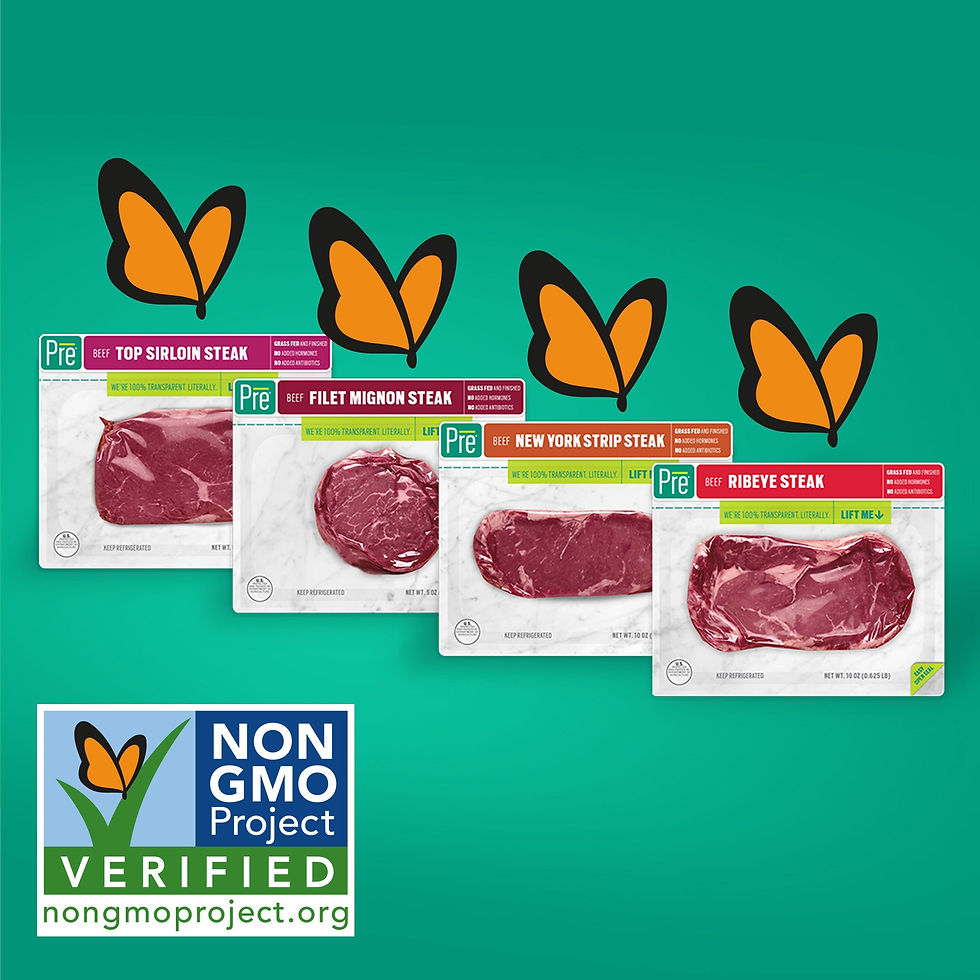
As part of our mission of 100% transparency, Pre is Non-GMO Project Verified, a third-party certification that shoppers can trust and easily identify. You can look up other Non-GMO Project Verified brands at nongmoproject.org. Keep in mind that the certification is voluntary, so not every non-GMO product carries it.
So for products that are not verified, how do you decide what to buy? Before your next shopping trip, arm yourself with a bit of knowledge about which foods, beverages, and ingredients commonly contain GMOs. Please do not avoid these foods, because the list is long and full of nutritious options. There are non-GMO varieties of all of them. You may just have to look into their sourcing and production methods before they go in your cart.
Foods and beverages that often contain GMOs
To help you tackle the grocery store with non-GMO confidence, the Non-GMO Project classifies 8 crops as "high-risk," based on how common their genetically modified varieties are and how widely available they are. If you are buying these, you might need to do a little extra digging:
Corn
Soy
Canola
Cotton
Sugar beets
Alfalfa
Papaya
Zucchini and summer squash

Common GMO categories
GMOs can also show up in places you might not expect, so it pays to examine these categories closely:
Animal products
Livestock, bee, and aquaculture feed are at high risk of being genetically engineered. This affects eggs, honey, meat, milk, and seafood.
Processed inputs
GMOs can appear in foods as processed derivatives or inputs from genetically engineered crops and microbes, through synthetic biology. Examples include corn syrup, flavorings, hydrolyzed and vegetable proteins, molasses, sucrose, vitamins, yeast, algae, sweeteners, milk proteins, and egg proteins.
Monitored crops
Many foods and ingredients are at high risk of contamination from existing genetically engineered crops, or are known to have genetically engineered versions in development. Examples include apples, flax, mushrooms, mustard, oranges, pineapples, potatoes, rice, salmon, sugarcane, tomatoes, wheat, turnips, bok choy, chard, rutabaga, beets, and squash.
Source: the Non-GMO Project. These lists change over time, so check nongmoproject.org for the current version.
Want to learn more?
Read GMO: what you need to know, see how organic and non-GMO differ, and learn about living non-GMO with clean beef.
FAQ
Which crops are most likely to be genetically modified?
The Non-GMO Project classifies eight crops as high-risk: corn, soy, canola, cotton, sugar beets, alfalfa, papaya, and zucchini and summer squash.
Can GMOs show up in animal products?
Yes. Livestock, bee, and aquaculture feed are at high risk of being genetically engineered, which affects eggs, honey, meat, milk, and seafood.
Is Pre beef Non-GMO Project Verified?
Yes. Pre's full line of grass fed and finished beef is Non-GMO Project Verified, a third-party certification.
Where can I buy Pre 100% Grass-Fed & Finished Beef?
Pre Brands beef is a lean, High Protein, delicious way to keep dinner healthy. Use our store locator to find a store near you, browse all Pre products, or find us on Instacart.