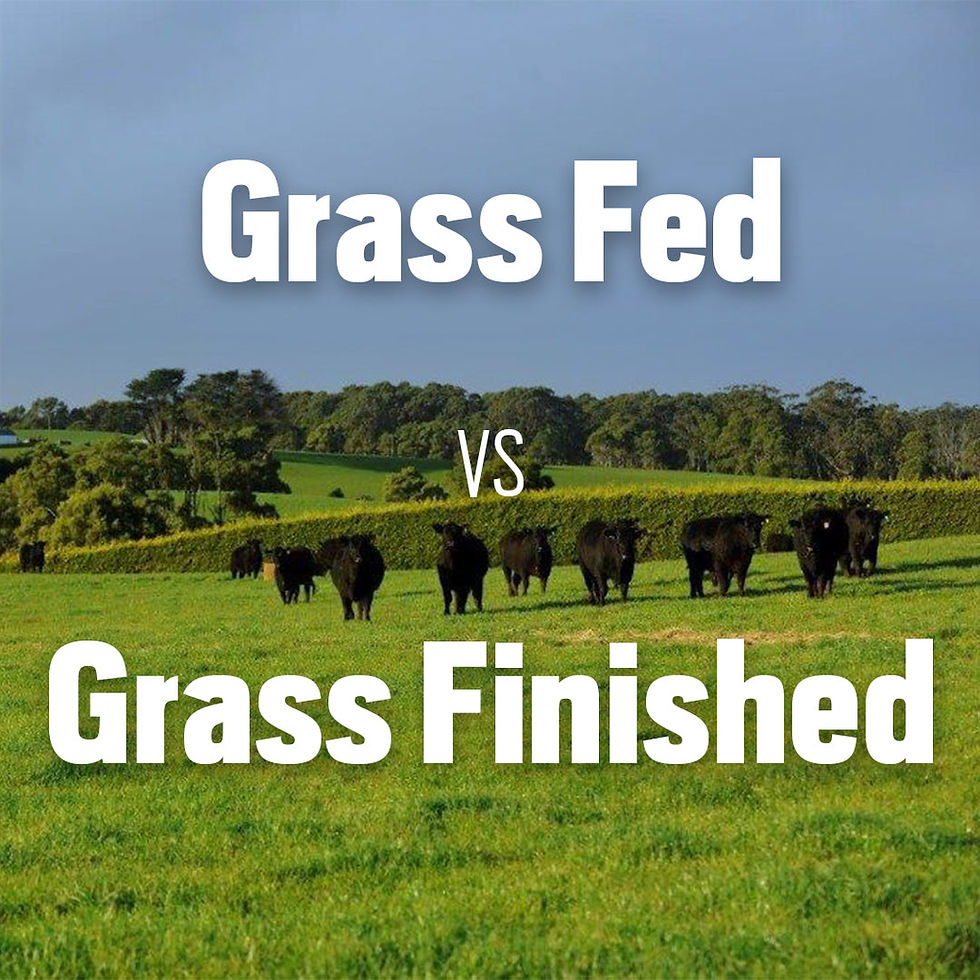
The Truth About Steak Fat
Updated: 2 hours ago
Steak fat tells a story. Grass-fed fat looks yellow-white and grain-fed fat looks bright white, and the difference comes down to what the cattle ate.
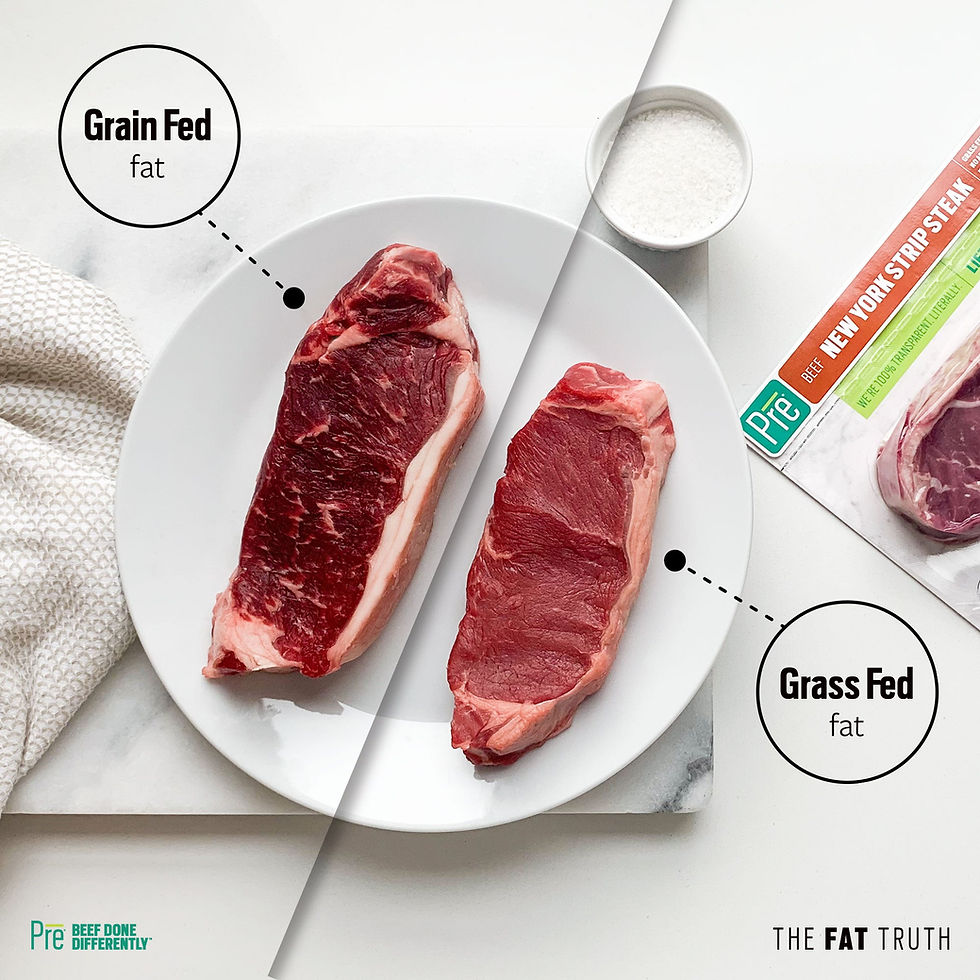
Have you ever looked at the marbling in beef and wondered why it looks so different from steak to steak? Marbling, the intramuscular fat in beef, can vary a lot from animal to animal, depending on its overall health and diet during its lifetime. Grain-fed and grass-fed fat are different.
Take a look at the different kinds of beef in your grocery store. Conventional beef from the butcher is typically sourced from grain-fed cattle, and it looks different from grass-fed beef. You might assume one is healthier than the other, but there are a surprising number of misconceptions about how we judge quality in beef, including how we think about the color of the fat. We took a deeper look at why the fat on grain-fed and grass-fed beef looks so different.
The main differences in steak fat
One of the most obvious differences is the color. Grain-fed cattle tend to have very bright white fat, while grass-fed cattle have fat that is off-white, almost a yellowish-white. It is a fun way to test your knowledge just by looking at a cut.
The reason is a pigment called beta-carotene. It is found in grass, so cattle with a diet high in nutrient-dense grasses have fat that is less white. Beta-carotene is also a source of vitamin A. If cattle eat grass year-round, they get their vitamins easily with every meal. Cattle that are grass-fed but not pasture-raised year-round may need vitamin A supplements in the winter, when the climate does not allow grazing and cattle are fed grain or dried grasses.
A grass-only diet also affects how the fat behaves. Grass-fed fat tends to be softer and break down more easily when you cook it, for a more tender, buttery bite. The fat in grain-fed steaks tends to be firmer and a little harder to chew.
The steak fat color breakdown
Grass-fed fat
Yellow-white in color.
The yellow comes from beta-carotene, which is found in grass.
Beta-carotene is a source of vitamin A.
If the cattle are pasture-raised year-round, they get plenty of vitamin A.
The fat is softer and melts or breaks down more when cooked, for an easier bite.
Grain-fed fat
White in color.
Minimal beta-carotene.
Animals often need vitamin A supplements.
The fat tends to be firmer and does not break down as much when cooking.
How Pre beef compares
Pre beef is always 100% Grass-Fed & Finished, because we source from climates that support year-round grazing on grass. That is why the fat on our beef is not bright white like grain-fed beef. Next time you shop for beef, take a closer look at the fat, and let it tell you more about the life the animal lived.
Read more about why Pre sources from Australia and New Zealand.
FAQ
Why is grass-fed fat yellow?
The color comes from beta-carotene, a pigment found in grass. Cattle with a diet high in nutrient-dense grasses have fat that looks yellow-white instead of bright white.
Is yellow fat on a steak bad?
No. The yellowish color is a sign of the beta-carotene in the cattle's grass diet, not a sign of spoilage.
What is marbling?
Marbling is the intramuscular fat in beef. It can vary a lot from animal to animal, depending on overall health and diet over its lifetime.
Read more: omega 3's in grass fed & finished beef.
Where can I buy Pre 100% Grass-Fed & Finished Beef?
Pre Brands beef is a lean, High Protein, delicious way to keep dinner healthy. Use our store locator to find a store near you, browse all Pre products, or find us on Instacart. New to grass-fed? Start with Grass-Fed Beef 101.